



The sealing integrity and structural stability of SMC water tanks depend fundamentally on the machining precision of the bolt holes in the panel flanges. Current industry practices primarily utilize two types of equipment: fully automatic flange drilling machines and traditional manual drilling tools. These methods differ significantly in core performance and suitability for application.
As a supplier of automatic drilling machines for fiberglass water tank panels, TechnoFRP provides the following comprehensive performance comparison chart and selection guide.
|
Key Comparison Dimensions |
Fully Automatic Drilling Machine for SMC Water Tank Panel Flange |
Traditional Manual Drilling Equipment |
|
Machining Precision |
PLC-controlled CNC servo positioning. Hole position error ≤ ±0.5mm. Hole spacing, diameter, and depth are completely consistent across batches of panels. |
Manual marking and positioning. Errors typically range from 1 to 3mm. Issues such as misaligned hole positions, uneven spacing, and inconsistent hole depths frequently occur. |
|
Processing Efficiency |
Drilling flanges on all four sides of a standard 1m water tank panel takes only 30–60 seconds. With multi-head simultaneous operation, one operator can manage 1–2 machines. |
Processing a single panel involves marking, clamping, hole-by-hole drilling, flipping the panel, and multiple other steps, taking 3–5 minutes. Production capacity is only one-tenth that of the automated equipment. |
|
Finished Product Pass Rate |
Uses drilling parameters specifically optimised for SMC (fibreglass-reinforced plastic). Carbide drill bits are fed at a constant speed. Drilling results in no edge chipping or fibre tearing; pass rate ≥99%. |
Manual feed force is uncontrollable. Flange edges are prone to cracking and chipping, resulting in a material scrap rate of 8%–15%. Secondary grinding and rework are required. |
|
Dependence on Manual Labor |
Operators with no prior experience can get up to speed with minimal training. Operations are unaffected by worker skill levels or staff turnover. A single machine can replace 3–6 drilling workers. |
Highly dependent on skilled technicians, scrap rates are extremely high when novices perform the work. Recruitment and retention costs are high, and production capacity fluctuates significantly based on personnel performance. |
|
Overall Costs |
The initial equipment investment is slightly higher, but significant savings are realized later in labor, material waste, and after-sales repair costs. The investment can be recouped within 1–2 years through scaled production. |
The equipment purchase price is extremely low, but long-term costs—including labor wages, losses from scrapped panels, and repairs for leaks—remain high, resulting in substantial hidden costs. |
|
Flexible Production Capability |
The CNC system stores multiple sets of sheet parameters, allows one-touch switching between standard 500/1000mm sheets and non-standard flange layouts, and supports simultaneous pipe hole cutting. |
Compatible only with simple, standard hole patterns. Requires re-marking when specifications change. Incapable of batch processing non-standard layouts; extremely poor adaptability. |
|
Product Compatibility |
Uniform flange hole spacing ensures easy bolt alignment and even gasket compression. The finished water tank passes the initial leak test with zero leakage or need for rework. |
Misaligned holes force bolts to pull on the flanges, causing uneven gasket pressure. The finished tank suffers from high leakage and rework rates, failing to meet large-scale engineering standards. |
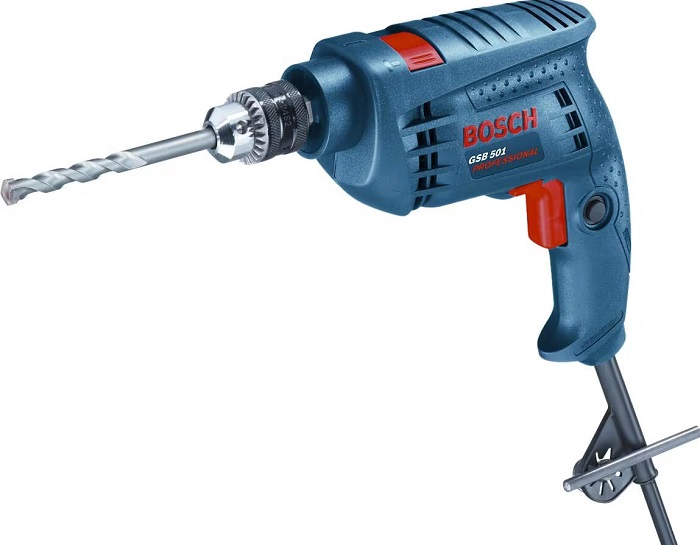
Traditional Manual Drilling Equipment: Suited Only for Niche, Emergency Scenarios
The primary advantages of this equipment are its low cost, portability, and flexibility; it requires no specialized facilities, programming, or complex setup, allowing for immediate operation. However, it suffers from critical shortcomings regarding machining quality, production capacity, and standardization. It is suitable only for low-volume tasks such as on-site repairs or patching of old water tanks, small-batch custom orders, and prototype creation. It is entirely unsuitable for large-scale mass production.
Automatic Flange Drilling Machine: Designed for Mass Production
This specialized equipment is engineered specifically for SMC compression-molded water tank panels. It features multi-head simultaneous drilling, automatic pneumatic clamping, and a rotary positioning mechanism. It enables the drilling of flange holes on all four sides of a panel in a single operation, eliminating the need for manual flipping. The machine is compatible with standard water tank panels of all specifications and supports customized hole configurations.
It not only resolves the critical issue of leakage and rework associated with manual drilling but also significantly reduces labor and consumable costs. Production quality remains consistently stable and controllable, fully meeting the standardization requirements for municipal, fire safety, and large-scale engineering projects.
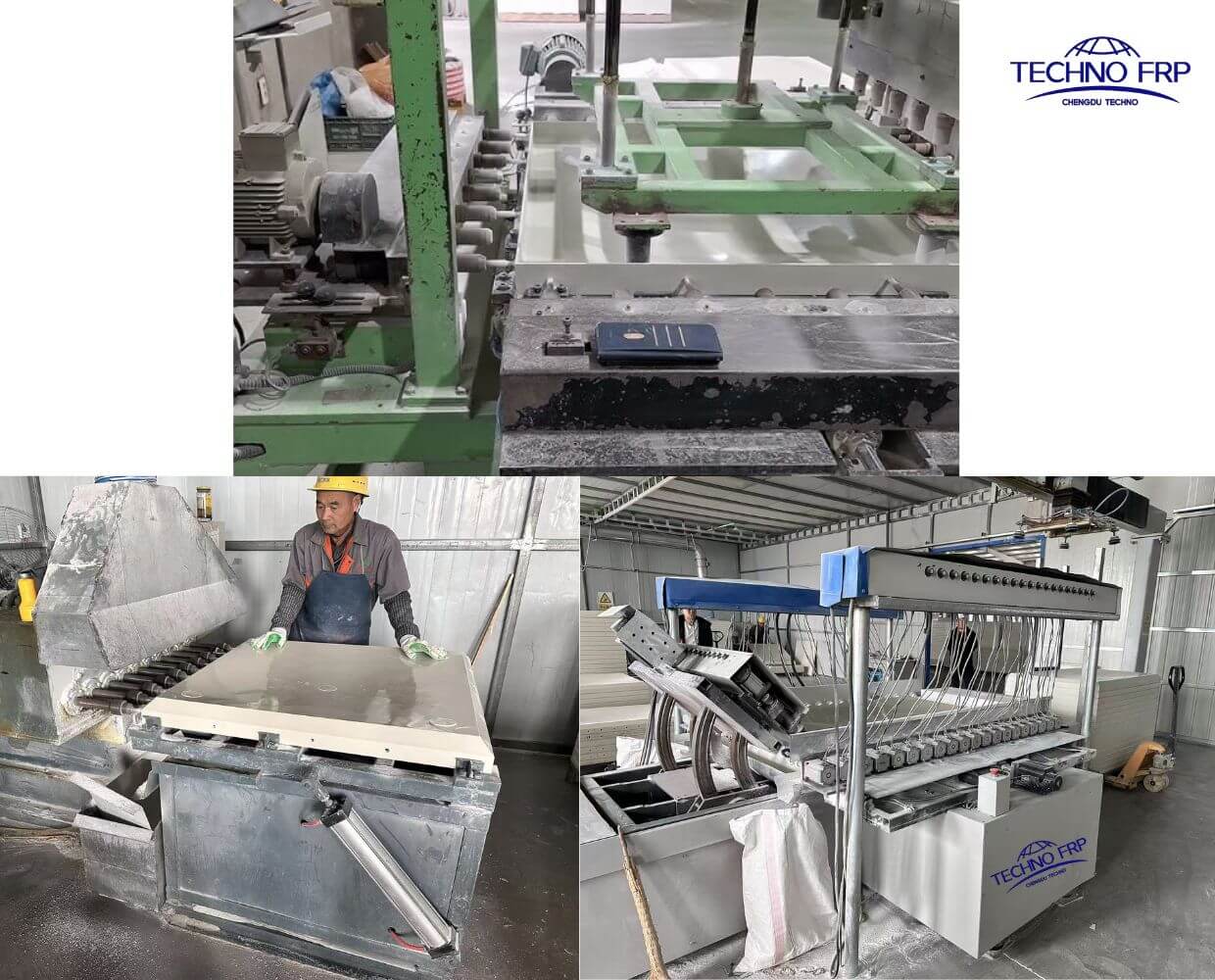
TechnoFRP provides not only fiberglass water tank panel flange drilling machines but also GRP water tanks and FRP water tanks. If you have any needs, contact us!
Post time: Jul-22-2026